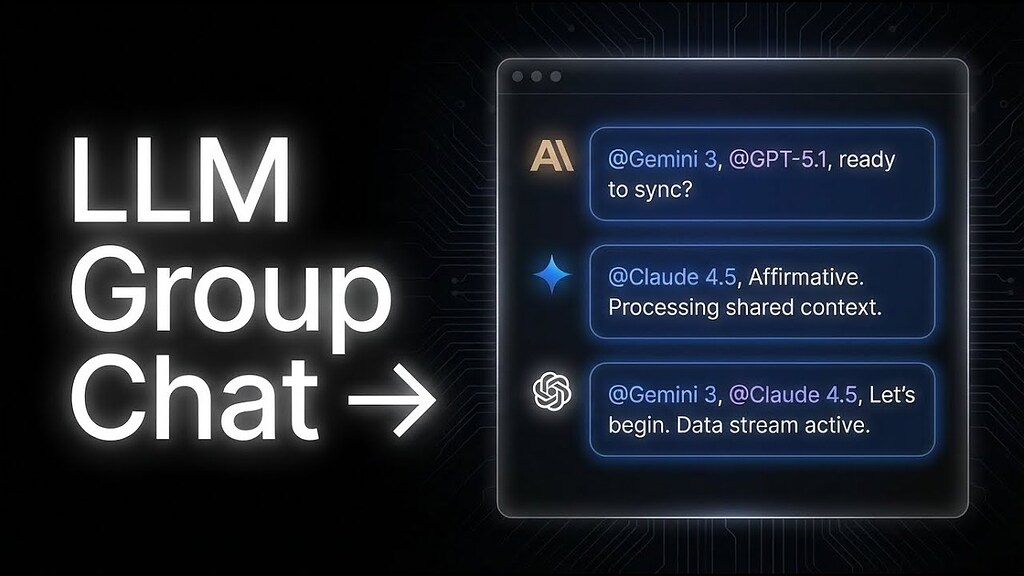
The creator demonstrates building a group chat application using the OpenRouter API that enables multiple large language models like Claude, Gemini, GPT, and Grock to interact with each other and the user in a dynamic conversation. They showcase features such as model tagging, autonomous replies, and controls to manage the chat flow, sharing the project code to inspire viewers to experiment with multi-model AI interactions.
In this video, the creator explores the idea of creating a group chat involving multiple large language models (LLMs) using the OpenRouter API, which provides access to a wide variety of models. The goal is to have different models like Claude, Gemini, GPT, and Grock interact with each other in a chat interface, responding to user messages as well as to each other’s messages. This concept was inspired by viewer requests, and the creator aims to demonstrate how to build such an application in a straightforward and fun way.
The creator begins by reviewing the OpenRouter documentation and setting up the environment with the necessary API keys. They then outline a plan using Opus 4.5 to build the chat system, which includes components like the chat container and message list. The logic is designed so that models respond not only to user inputs but also to messages from other models, using an “at mention” feature to tag specific models in the conversation. The creator tests the setup locally, debugging issues such as setting default models and cleaning up unused code.
Once the system is running, the creator demonstrates the group chat interface where multiple models can be selected and messages sent. The models autonomously respond to each other, creating a lively conversation. However, the creator notices the chat can spiral out of control with models continuously replying, so they add a stop button to halt the API calls and prevent endless loops. Additional improvements include preventing the same model from responding consecutively and refining the mention logic.
The video showcases several interactions where the models discuss topics like an OpenAI “code red” memo and the AI race, tagging each other and responding thoughtfully. The creator experiments with tagging specific models to direct responses and observes how the models engage in a dynamic conversation. The group chat effectively turns into a multi-model discussion, with each model contributing unique perspectives and responses, making the interaction entertaining and insightful.
Finally, the creator invites viewers to try out the project themselves by sharing the code on GitHub, encouraging experimentation with different models and configurations. They express hope that this demonstration inspires others to explore creative applications of multiple LLMs working together. The video concludes with a positive note on the potential of combining various AI models in a single interactive environment for fun and innovative uses.
Leave a Reply